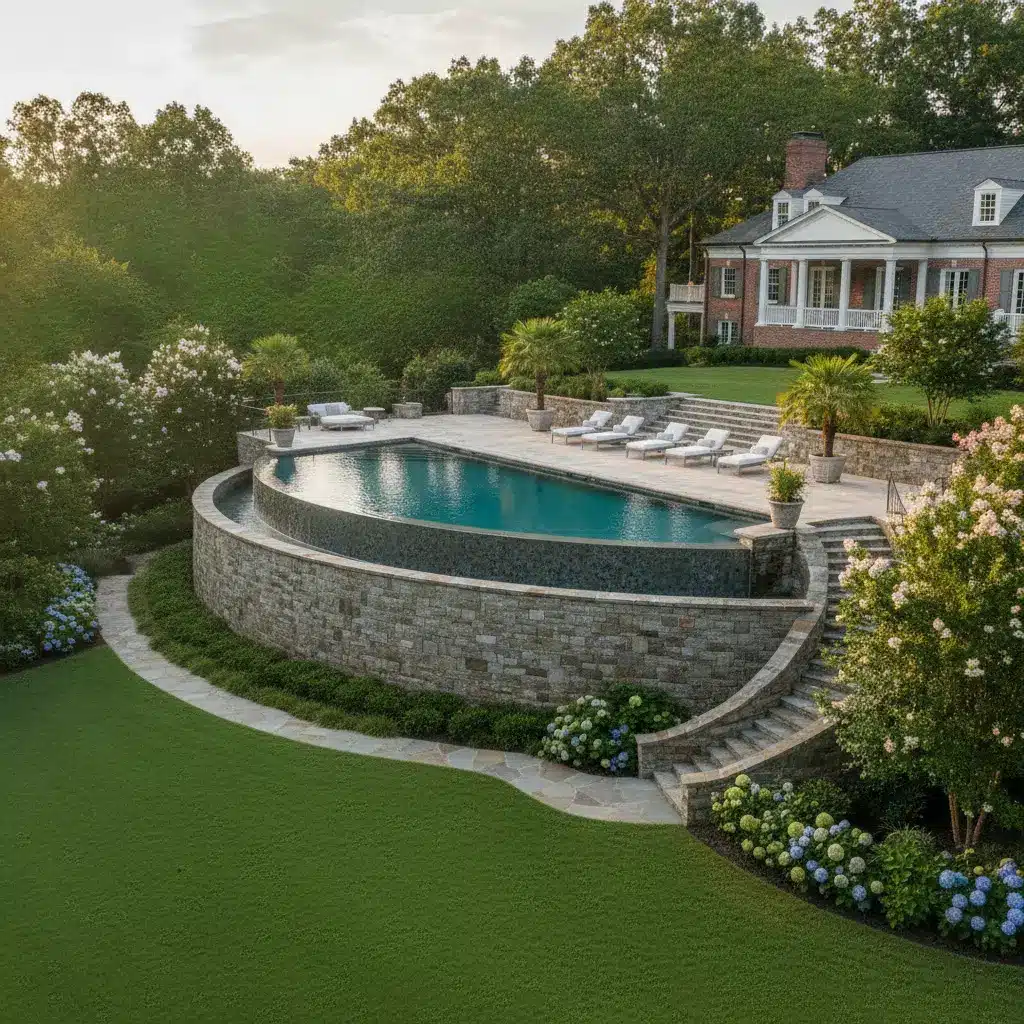
Could a sloped Atlanta yard be quietly putting your home and outdoor space at risk? Erosion, heavy runoff, and shifting soil can reduce usable space and create drainage concerns. A properly designed retaining wall may help guide water, support a slope, and protect your property.
Professional installation often ranges from $20 to $50 per square foot. Many regional projects fall between $3,500 and $10,000. Smaller improvements may range from $1,200 to $2,000, while larger structural work can reach $12,345 to $13,700.
This guide explains the factors that shape retaining wall cost in Metro Atlanta. We also outline how site access, drainage, materials, height, and permits affect the final estimate. Empire Waterproofing is a family-owned, locally operated company founded in 2016 in Dacula, Georgia. Our team brings more than 30 years of combined experience to waterproofing, foundation repair, crawlspace, and drainage projects.
Key Takeaways
- Atlanta pricing depends on size, materials, soil, drainage, and access.
- Most professional projects range from $3,500 to $10,000.
- Small landscape work may require a smaller budget.
- Large structural projects need careful planning and engineering.
- Empire Waterproofing serves Metro Atlanta and nearby communities.
- Call (770) 406-6447 or email af.empire11@gmail.com for guidance.
Retaining Wall Cost in Atlanta at a Glance
Atlanta homeowners can use national pricing as a starting point, but each property needs a closer review. The national average is about $6,000 to $6,300, while many projects fall between $3,500 and $9,645. Soil, drainage, access, materials, and labor can shift the final price.
Typical Pricing Per Square Foot and Linear Foot
Professional installation commonly runs $20 to $53 per square foot. To estimate area, multiply length by height. For example, 42 square feet may range from $840 to $2,226. A 175-square-foot project may range from $3,500 to $9,275.
Pricing per linear foot helps compare projects with similar height and construction. A two-foot structure may run $40 to $80 per linear foot. A six-foot structure may reach $180 to $350 per linear foot because it needs stronger support and more preparation.
Common Project Price Ranges for Metro Atlanta Homes
A 350-square-foot installation may range from $7,000 to $18,550. These figures offer planning guidance, not a final quote. We recommend a site-specific evaluation so our team can review slope conditions, drainage, access, and material availability before confirming your project estimate.
How Wall Size and Height Affect the Total Cost
Project dimensions often shape the estimate more than any other factors. Length, height, soil conditions, access, and drainage all affect the work required. We measure the face area in square feet, then review support needs before preparing a reliable quote.
Square Footage, Length, and Soil Pressure
Pricing may appear per square foot or per linear foot. A 10-foot structure may run from $400 to $3,450, while a 100-foot project may range from $4,000 to $34,500 when heights vary from 2 to 6 feet. Structural work measuring 3 to 5 feet tall and 30 to 60 feet long often falls between $6,000 and $15,000.
As height increases, soil pressure rises quickly. Wet or compacted Atlanta soil pushes harder, especially on slopes near a foundation. Terracing can divide one tall structure into shorter levels and may reduce the load on each section.
When Taller Walls Need Reinforcement
A four-foot structure may need two geogrid layers. A six-foot design may require four or five layers extending 6 to 8 feet behind it. Structures over 4 feet commonly need engineering. Our experienced team can help protect your home, foundation, and usable yard from shifting soil.
Retaining Wall Cost by Material
Material selection shapes the budget, service life, drainage plan, and appearance of your Atlanta project. We compare reliable options below so you can choose protection that fits your property and goals.
Concrete Blocks and Poured Concrete
Segmental concrete blocks typically run $20–$35 per square foot and can last 50 or more years. Their interlocking design supports flexible installation and efficient drainage. Poured concrete ranges from $20–$55 per square foot and may serve for 50–100 years with proper reinforcement, waterproofing, and drainage.
Natural Stone, Boulder, and Brick Options
Natural stone costs about $15–$95 per square foot, while brick runs $20–$40 per square foot. These materials offer strong curb appeal and can complement established landscapes. Boulder construction creates a natural look, but site access and preparation may increase labor needs.
Timber, Vinyl, and Other Budget Materials
Timber averages $15–$30 per square foot and often lasts 15–20 years. Vinyl ranges from $10–$15 per square foot and may last about 50 years. Gabions run $10–$55 per square foot, depending on stone and framing. Our team reviews backfill, drainage, soil pressure, and installation details before recommending the best material.
- Concrete: durable and highly customizable
- Stone or brick: attractive, long-lasting options
- Timber or vinyl: lower-price choices with tradeoffs
Retaining Wall Costs by Project Type
The right project type depends on your yard’s slope, soil load, and goals. A simple border may improve planting space, while a larger design can protect a foundation and control erosion. These ranges help Atlanta homeowners plan with greater confidence.
Garden and Landscape Borders
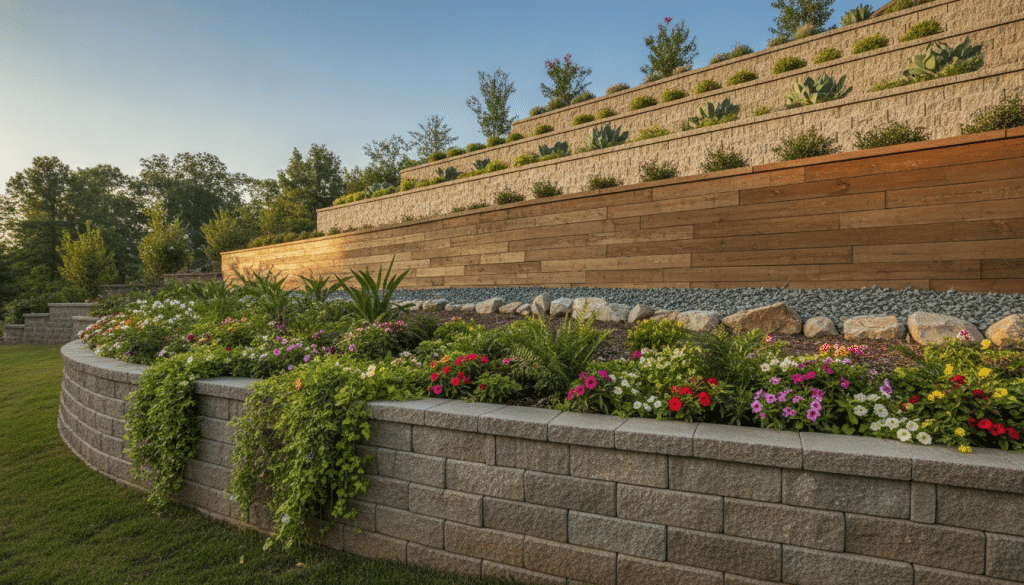
Garden walls under 3 feet high and 20–40 feet long commonly run $2,000–$6,000. They suit planting beds, borders, and modest yard upgrades. Installation may include a 6–8-inch compacted gravel base, drainage aggregate, perforated pipe, and cap stones. Blocks or concrete retaining products can create a clean, durable finish.
Structural Slope Support
Structures 3–5 feet high and 30–60 feet long often range from $6,000–$15,000. They manage heavier soil loads near patios, steep yards, and foundations. Labor may include grading, geogrid, filter fabric, and a 10–14-inch gravel base. A permit may also apply.
Multi-Level Terraced Systems
Terraced systems commonly range from $12,000–$25,000 or more. Multiple shorter levels can create gardens, walkways, or seating areas. In some yards, two 3-foot walls with a 4-foot planting space may cost less than one 6-foot structure. Our team designs each project for safer slopes, usable space, and lasting protection.
Empire Waterproofing has served Metro Atlanta since 2016 from Dacula, Georgia. Our 30-plus years of combined experience support honest recommendations, quality installation, and customer satisfaction. For a dependable site evaluation, call (770) 406-6447 or email af.empire11@gmail.com. We are ready to help protect your home with a lasting solution.
Labor, Excavation, and Site Preparation Expenses
Before construction begins, our crew prepares the ground for a safer, smoother installation. Site conditions can affect the final estimate as much as the chosen material. Careful planning also helps protect nearby foundations, utilities, landscaping, and drainage paths.
Grading, Clearing, and Soil Removal
Labor often runs $15–$40 per square foot, or about $50–$75 per hour. Grading adds roughly $0.40–$2 per square foot and often starts near $500. Excavation may range from $50–$200 per cubic yard.
Clearing, hauling, and cleanup also shape the project cost. Difficult land clearing may reach $1,500–$3,000 per acre. Tree removal commonly costs $385–$1,070 per tree, depending on size and location.
Access Challenges and Equipment Requirements
A narrow gate or steep yard may require smaller machines and extra hand work. Carrying blocks, concrete, gravel, or soil through limited access can raise labor by 15%–25%. Our equipment and preparation plan can shorten installation time and reduce safety risks.
- Site grading and soil removal
- Material hauling and equipment use
- Utility and landscape protection
- Final cleanup before completion
Drainage and Waterproofing Costs for Atlanta Retaining Walls
Water management plays a major role in protecting an Atlanta slope. Without a clear drainage plan, trapped water can push against the structure and threaten your yard, foundation, and home. Empire Waterproofing helps families prevent moisture-related damage with dependable waterproofing, drainage, and foundation solutions.
Backfill, Gravel, Filter Fabric, and Perforated Pipe
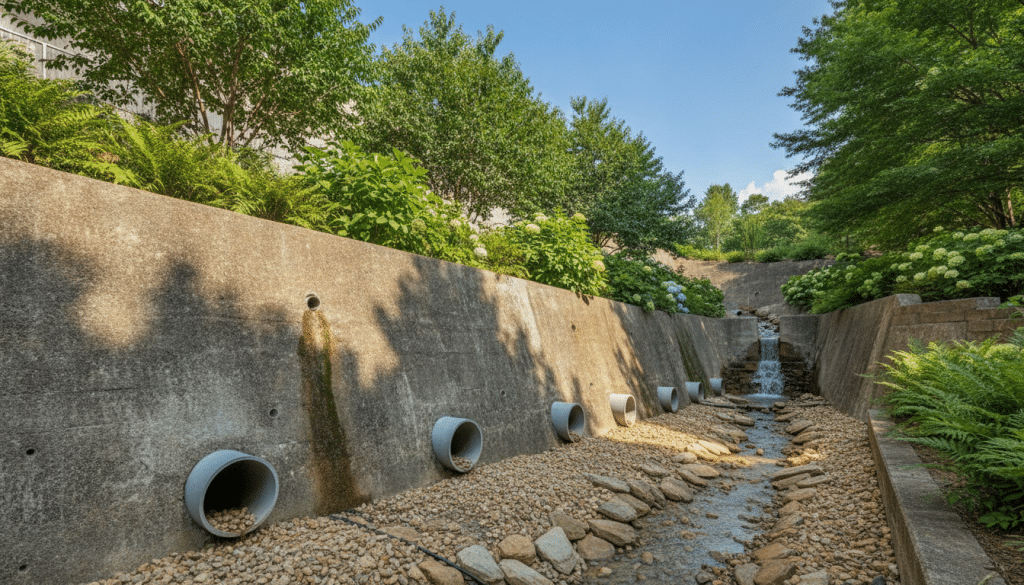
A proper system uses compacted gravel, filter fabric, and perforated pipe behind the structure. The pipe needs a safe discharge route. Waterproofing commonly adds $2–$10 per square foot. Rebar installation may add $1.50–$2.50 per square foot. Concrete retaining blocks and other material choices also affect the estimate.
When surface water collects near a slope, a French drain may redirect it away. Installation commonly ranges from $1,650 to $12,250, based on excavation, access, and soil conditions.
How Poor Drainage Can Cause Wall Failure
Drainage problems lead to many failures. Clay soil holds water and creates greater pressure than well-drained soil. Blocked outlets, missing fabric, weak backfill, or poor excavation can cause leaning and cracking. We treat drainage as essential protection, not an optional upgrade.
Permits, Engineering, and Reinforcement Requirements
Local approval helps ensure a retaining wall can handle soil pressure, water, and nearby structures. Georgia requirements vary by municipality, so homeowners should confirm the rules before excavation. In many areas, walls over 4 feet require a building permit and stamped engineering plans.
Permit Requirements for Taller Walls in Georgia
A permit may range from $40 to $450. Stamped drawings often add $500 to $1,500 to the project cost. An engineer reviews height, soil conditions, foundation limits, drainage, reinforcement, and the structure’s type. This review supports safer design and helps protect your property investment.
Concrete retaining systems may need rebar, which commonly adds $1.50 to $2.50 per square foot. Concrete retaining walls and other taller walls also may require a footing inspection before construction continues. Many jurisdictions require a final inspection after the work ends.
- Verify permits with your city or county office.
- Schedule engineering review before digging.
- Confirm footing and final inspections.
We recommend handling approvals early. Proper documentation can prevent delays, resale issues, and unsafe construction. Empire Waterproofing helps homeowners plan compliant retaining walls with safety and long-term reliability in mind.
DIY vs. Professional Retaining Wall Installation
A small landscape project can suit a skilled homeowner, but safety should guide every choice. DIY materials often run $4–$20 per square foot, compared with $20–$53 for professional work. A basic tool set may total about $157, including a level, shovel, tamper, rubber mallet, tape measure, and saw rental.
When a Small Garden Wall May Be DIY-Friendly
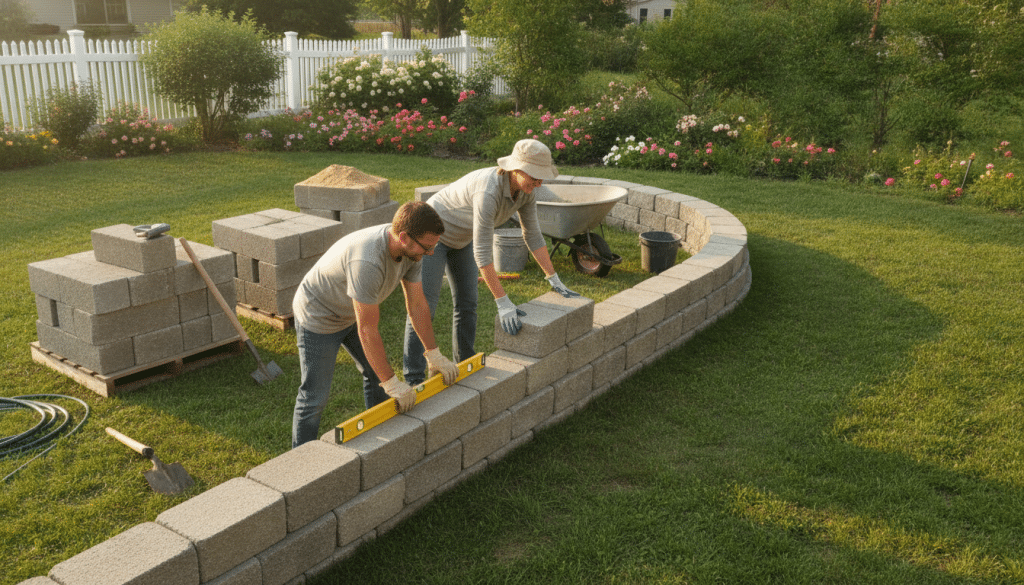
A short, straight structure under 2–3 feet may work on flat, well-drained ground. Interlocking blocks, a compacted base, and careful leveling support a sound result. However, labor takes time, and the material cost does not include hauling, excavation, or cleanup.
Why Slopes Near a Foundation Require Experienced Help
Choose professional help for structures over 3 feet, clay soil, curves, corners, steps, or projects near a foundation. Poor drainage can shift blocks and make walls lean within two or three years. Our team understands soil pressure, moisture paths, permits, and concrete retaining systems.
A failed installation may require demolition at $15–$30 per linear foot. Repairs often range from $400–$1,065. Experienced installation reduces safety risks and helps protect your home for years.
Ways to Manage Your Retaining Wall Project Budget
A smart budget weighs more than the starting estimate. We review service life, drainage, workmanship, labor, and future repairs. This approach helps Atlanta homeowners choose protection that fits both the yard and the household budget.
Choosing Materials That Balance Price and Lifespan
Compare the cost per square foot with expected service life. Vinyl runs $10–$15 per square foot and may last about 50 years. Concrete blocks range from $20–$35 and often last 50 years or more. Timber costs $15–$30, but its typical life is 15–20 years. Drainage performance and installation quality also affect value.
Considering Terracing and Combined Landscape Work
Two shorter walls may require less reinforcement than one tall structure. Terraced systems usually range from $12,000–$25,000 or more. Combining grading, drainage, patio work, or lighting can reduce repeated equipment setup and site preparation. Lighting may add $2,000–$5,810, while patios may add $1,500–$5,550.
- Prioritize drainage and foundation protection.
- Choose durable material for long-term value.
- Bundle compatible yard improvements when practical.
Conclusion
Protecting a sloped Atlanta property starts with a clear plan, not a guess. Use $20–$53 per square foot and $3,500–$9,645 as planning ranges, not guaranteed quotes. A per linear foot figure can also help compare similar designs. Height, length, soil, access, excavation, drainage, materials, and labor shape each retaining wall cost.
Concrete blocks may serve 50 or more years, while timber often lasts 15–20 years. Proper backfill, waterproofing, reinforcement, and drainage help prevent failure. Structures above 4 feet often need engineering, a permit, and inspections. Smaller garden projects may suit limited DIY work.
Empire Waterproofing has served Metro Atlanta since 2016 from Dacula, Georgia. Our 30-plus years of combined experience support honest recommendations, quality installation, and customer satisfaction. For a dependable site evaluation, call (770) 406-6447 or email af.empire11@gmail.com. We are ready to help protect your home with a lasting solution.